
When the library becomes the town's backup plan
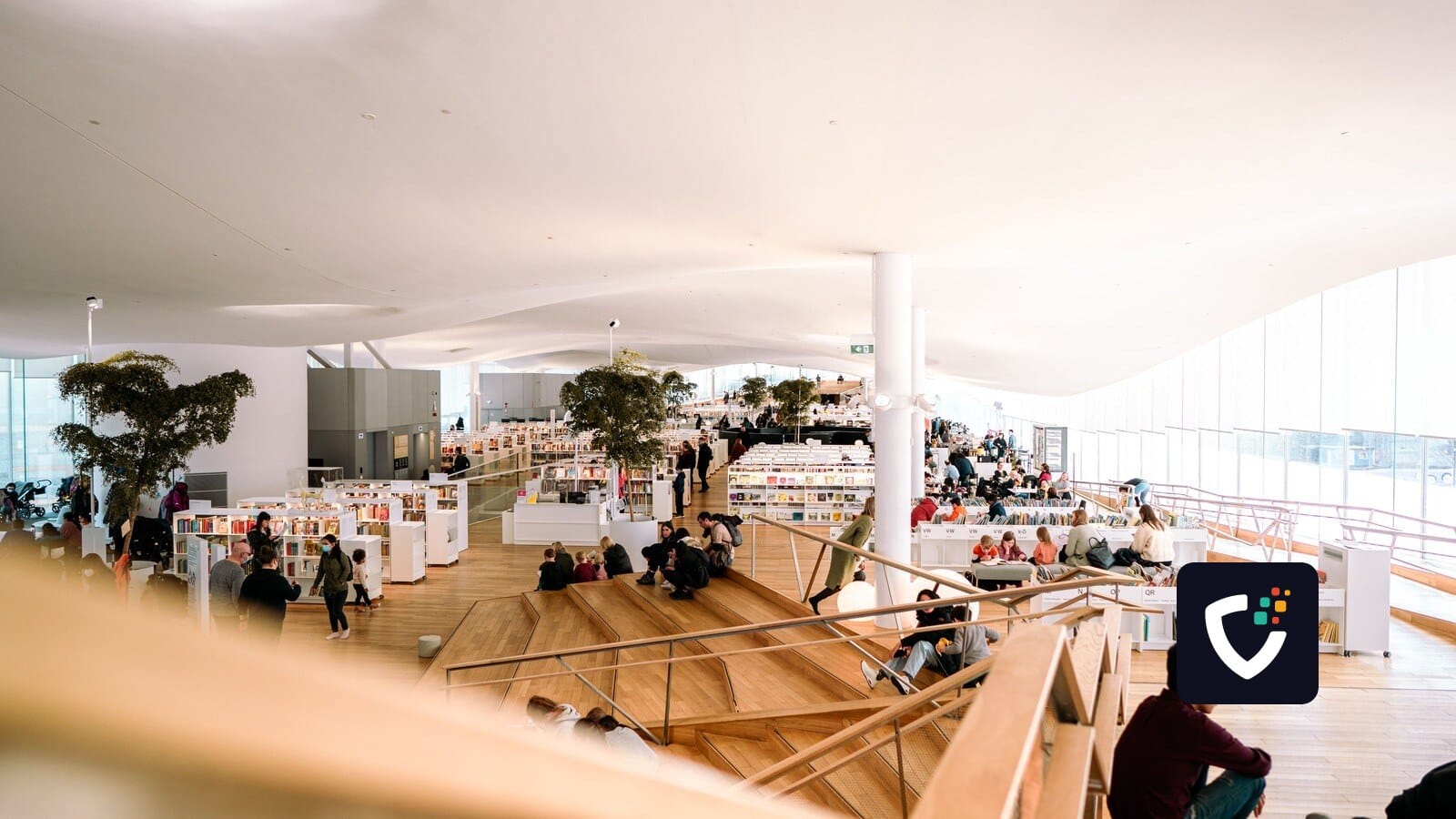
Imagine walking into a public library on a difficult afternoon. You have not come for a book. You need somewhere to sit, a connection to information and a person who can help you work out where to start.
The shelves are still there. So are the readers. What has changed is what this ordinary public place means to you today.
Across the American public sector, libraries invite a question that extends well beyond their doors: what happens when a familiar community institution becomes part of the response to heat, disruption and uncertainty?
There is real value in that role. There is also a danger in celebrating it without asking what makes it possible.
A public place people already know
A community does not begin preparing for disruption on the day something goes wrong. Its ordinary places and relationships are already part of what it has available.
A library can offer a recognizable entrance, staff accustomed to helping people find information and space used for different purposes. Those qualities can become especially useful when a resident’s normal arrangements have broken down.
This does not mean every library provides the same services, or that every person experiences the building in the same way. Access, opening hours, transport and local rules still matter.
The American Library Association’s discussion of resilience identifies libraries as potential partners in helping communities prepare and respond. It also recognizes that this role sits within competition for limited funding. It is a professional perspective, rather than evidence that every library is equipped for every emergency. ALA’s resilience discussion.
The public-sector question is how to build on an existing community asset without treating its capacity as unlimited.
A cooling space is a specific promise
Pima County, Arizona, provides a concrete example. Its heat-relief information distinguishes library cooling spaces from other types of support. It says library locations offer a place to get out of the heat during regular library hours, alongside normal library services. Pima County heat-relief information.
That last qualification deserves attention. A map marker is not a promise of round-the-clock refuge.
For the resident, the relevant questions are practical. Is the location open when needed? Can they get there? What can they expect when they arrive, and where can they go when it closes?
For the public agencies involved, the challenge is to make those answers fit together. A library may be one useful part of a wider network, with other locations covering different needs or hours.
The distinction protects both residents and staff. People need an accurate account of the help available, not a broad label that creates expectations the building cannot meet.
Libraries are affected by disasters too
The idea of a dependable public place can slide into an assumption that it will always be there when needed. That assumption needs testing.
In its review of 2024, Buncombe County Special Collections reported a closure from September 27 through October 20 following Helene, alongside other county libraries. The account is a reminder that the institutions supporting a community can also be disrupted by the same event. Buncombe County Special Collections’ 2024 review.
This is not an argument against including libraries in local planning. It is an argument for doing so realistically.
Can the building operate under the conditions being considered? What happens if staff cannot reach it? Which services depend on power or connectivity? What alternative will be communicated if the branch must close?
The answers belong in an agreed local plan. They cannot be supplied by goodwill after the situation has already changed.
Recovery is more than the first few days
Libraries can contribute in ways that look different from emergency assistance.
Buncombe County’s Come Hell or High Water project collects and preserves the stories and records of communities affected by Helene. Its activities include a digital memory collection and oral histories. The project connects recovery with the library’s work of helping a place understand and preserve its own experience. Come Hell or High Water.
That contribution should not be confused with providing clinical care or replacing material assistance. Remembering a disaster does not repair a home. But recovery also includes how people make sense of what happened, whose experiences are retained and what the community can learn later.
This is a useful reminder that resilience need not mean adding an entirely unfamiliar mission. Sometimes it means supporting a library to apply its existing strengths in a changed situation.
Information, local knowledge and public access remain central to the work.
Praise is not an operating budget
There is a temptation to turn stories of public-service commitment into reassurance that the system will cope. Staff were resourceful before, so surely they will be resourceful again.
That is a poor basis for a plan.
If a community wants a library to take on an additional role, the conversation should include staffing, training, building capability, partner support and funding. It should also establish which responsibilities belong elsewhere.
Library workers should be able to help residents find the right specialist without being expected to become that specialist. An information desk cannot substitute for an entire network of housing, health and emergency services.
Nor should the people who come to read, study or use ordinary library services disappear from the discussion. A building may need to support several legitimate needs at once. Space, noise, privacy and staff attention have limits.
These are not objections to a broader community role. They are the conditions that make such a role credible.
Make the familiar place part of a supported network
For local government, the opportunity is to involve libraries early, with library staff helping define what their sites can contribute. The result may vary between a rural branch, a city library and a larger county system.
The aim should be a clear contribution within a wider network, with realistic hours, alternatives and relationships. That is more useful than an ambitious title attached to an unsupported building.
Back at the entrance, the person arriving needs something fairly simple: a truthful understanding of what help is available and a workable next step.
The library may be exactly the right place to begin. If the town is relying on it, the town needs to make sure the library has something to rely on too.
Make every report count.
Tell us what your team reports and we will show you how it works in Logincident.
Contact us