
If nobody can reach the bolt, is it good engineering?
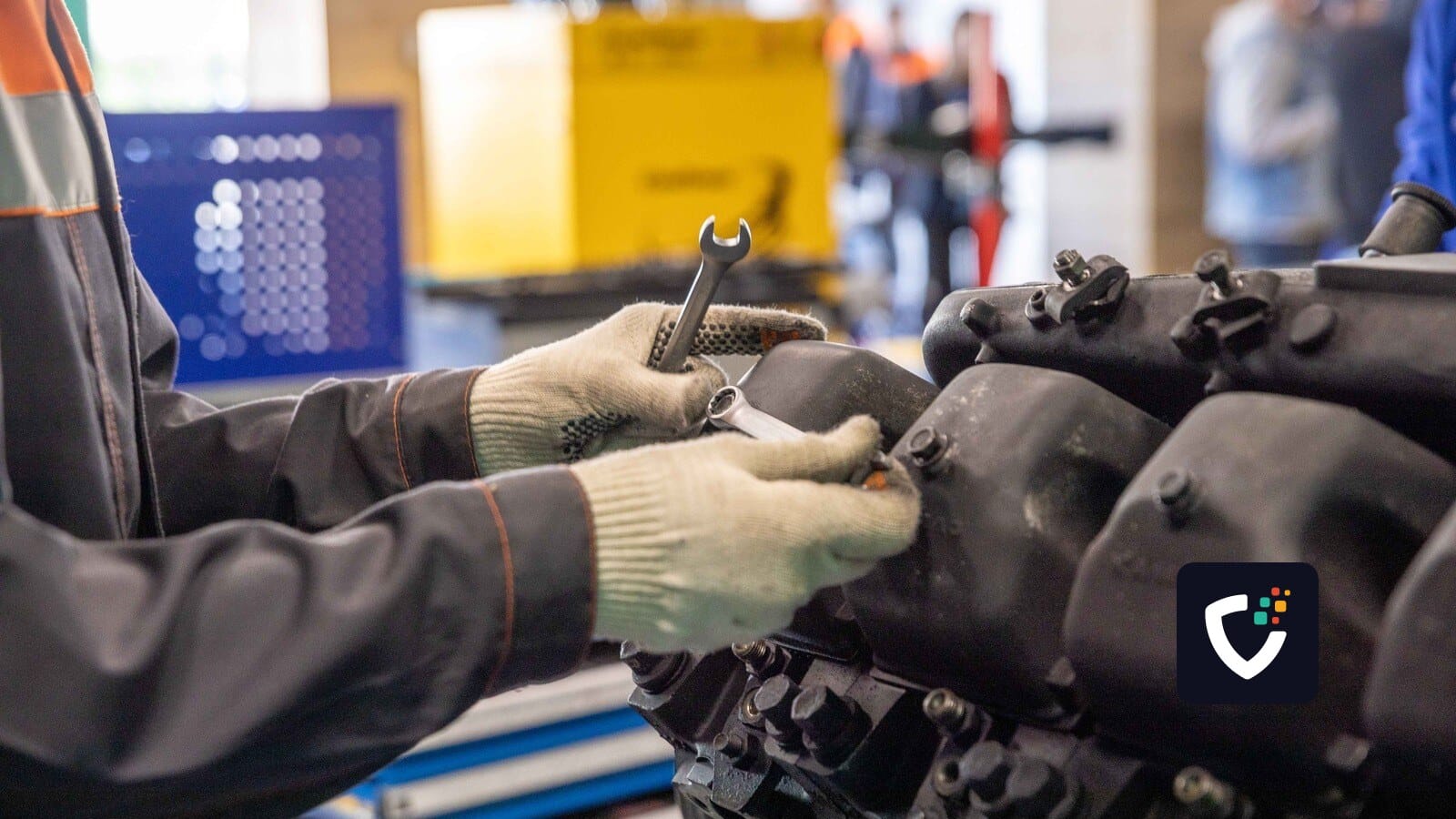
A machine can meet its performance targets and still leave someone with a miserable maintenance job. The moment it needs attention belongs in the design brief too.
The replacement part is on the bench. The fault is understood. The technician knows what needs doing.
There is just one problem: getting to it.
Imagine a small component sitting behind a pipe, inside a frame, beyond a cover that cannot swing fully open in the space where the machine has been installed. The repair itself is straightforward. Everything around it is an expedition.
Somewhere in the design process, that component fitted perfectly.
This imagined scene captures a question that can produce a rueful laugh in a workshop and a much longer conversation in a design review. What does it mean for equipment to work well if looking after it is unnecessarily difficult?
Even Hubble had a stubborn fastener
There is a spectacular version of the problem far beyond the factory floor.
During the 2009 Hubble servicing mission, repairing the Space Telescope Imaging Spectrograph involved removing 111 tiny screws. NASA developed a fastener capture plate to prevent them floating away. Yet a stripped bolt on a handrail obstructed access, and the repair team had to resolve that obstacle before continuing. NASA, Hubble’s impact on human spaceflight; NASA, the final Hubble servicing mission.
The achievement was extraordinary. Hubble’s servicing history is a demonstration of engineering ingenuity, not a convenient story about foolish designers.
It also makes an everyday truth unusually vivid. Knowing how to fix the fault is only one part of being able to fix the equipment. Access, tools, handling and the surrounding conditions belong to the job.
Most maintenance teams do not have a spacecraft waiting outside. They still have to work with the space and equipment somebody has left them.
The maintenance task is bigger than the component
On a drawing, replacing a part can look like a short sequence. Remove the fastener. Withdraw the component. Fit the replacement.
In the installed machine, each verb contains questions.
Can the technician see what they are doing? Is there room for the tool to move, rather than merely fit? Where does the removed component go? Can it be handled without disturbing something else? How will the team confirm that the equipment has been correctly restored?
That is the practical territory of maintainability: how readily equipment can be kept in, or returned to, the condition in which it does its job.
HSE’s maintenance guidance calls for attention to accessibility, complexity, identification and the working environment. It also recommends involving maintenance personnel in equipment design and the design of the maintenance work itself. HSE, maintenance error.
There is an important shift in perspective here. The technician is not an inconvenient addition to an otherwise complete machine. The person, their tools and the task are part of the equipment’s working life.
NASA makes that especially explicit in its human-spaceflight requirements: maintenance access must accommodate the crew, the tools and the protective equipment needed for the work. Those are requirements for a particular spaceflight context, not a factory specification, but the underlying question travels well. NASA, hardware and equipment, section 9.7.
What, exactly, have we allowed room for?
Give the designer a fair hearing
It is easy to blame a difficult repair on someone who has never held a spanner. It is also often an incomplete explanation.
A designer may be balancing stiffness, weight, cooling, contamination control, guarding, available floor area, manufacturing cost and the customer’s requested performance. Making one item easier to reach can make another requirement harder to satisfy.
Some assemblies are deliberately replaced as modules. Some components are intended to last for the service life of the product. Adding access everywhere can add size, joints, parts and new failure opportunities.
The useful challenge is therefore more precise than demanding that every bolt be instantly reachable. Which tasks are expected? How often? Under what conditions? What happens when an unlikely failure does occur? What level of repair will actually be available where the equipment operates?
A difficult maintenance task can be the result of a considered trade-off. It can also be the result of a trade-off nobody realised they were making.
The design review should be able to tell the difference.
The machine is not installed on a blank page
Even a thoughtfully designed piece of equipment can become awkward after installation.
Picture another hypothetical scene. A supplier has allowed a clear service side. During layout planning, an adjacent item moves. A tray crosses the opening. Storage gradually occupies the remaining space.
The machine has not changed, but its maintainability has.
This is why the conversation needs the people responsible for the whole working environment. HSE’s design guidance emphasises early human-factors consideration and involvement of people who understand the work, including end users. HSE, design.
For a project team, that suggests looking beyond the equipment outline. The place where someone will stand, the route by which a heavy item will leave and the conditions under which a task will be performed all deserve attention before the surrounding space fills up.
An apparently empty area may already have a job.
Rehearse the unglamorous part
A revealing design review might begin with an ordinary request: show us how this item will be changed once the equipment is installed.
Depending on the project, the answer might be explored through a model, a mock-up, a supplier demonstration or a walk-through with maintainers. The purpose is to test the sequence, including preparation and restoration, rather than admire a clear view of a disassembled machine.
The discussion needs both perspectives. A technician can explain why a particular movement is awkward or why a familiar arrangement is hard to distinguish. A designer can explain what constrains the alternatives. Together, they can decide whether the compromise is justified and whether there is a better one.
This is not an invitation to remove guarding or bypass isolation to save time. Suitable access and a safe method of work need to be developed together. A faster repair is not an improvement if it relies on making the task less safe.
Nor does every issue require an elaborate redesign. Sometimes the useful change is a different orientation, a clearer identification, an agreed tool or preserving the space that the original design expected. The right answer depends on the equipment and the task.
Ask about the day after commissioning
Commissioning demonstrates something important: the equipment can perform under the conditions being tested. Its working life asks additional questions.
Can it be inspected? Can it be maintained by the people and facilities available? Can it recover from the faults it is reasonable to prepare for?
Those questions deserve attention while the answers can still influence the design and installation.
Return to the technician, the replacement part and the inaccessible component. The problem may be a necessary compromise. It may be a layout change. It may be something a short conversation could have prevented.
Before the next design is signed off, invite the person who will have to maintain it to take a look.
Then ask them to show you where they would put the spanner.
Make every report count.
Tell us what your team reports and we will show you how it works in Logincident.
Contact us