
The machine still works. Its digital support has retired.
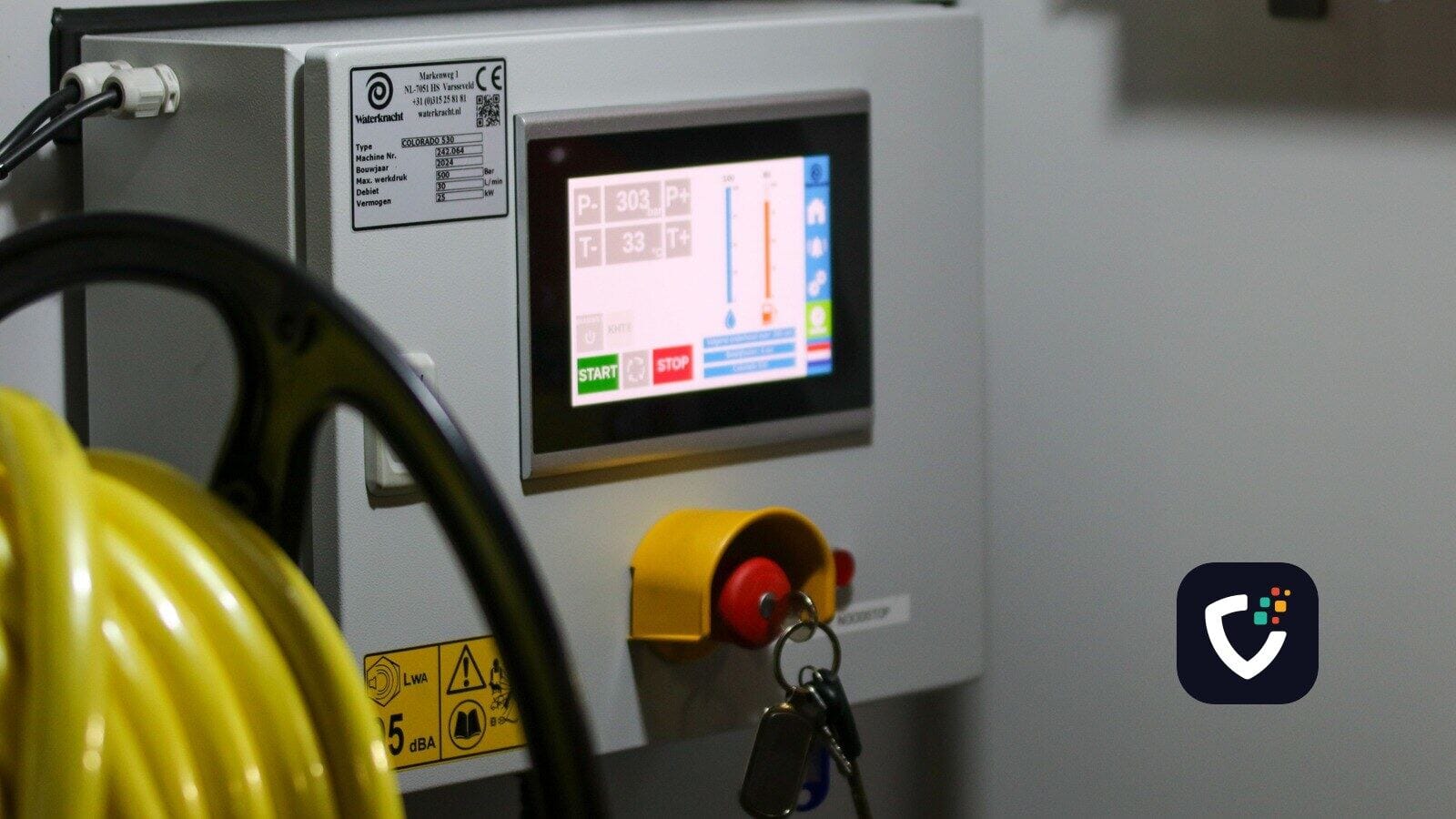
Picture a small American manufacturer with a machine everyone trusts. It makes a demanding part reliably, the operators know its habits, and replacing it would mean a substantial investment. Then a routine conversation about its control computer reveals a different story: the software support ended years ago.
Nothing on the shop floor has visibly changed. The machine has not become less useful overnight. But the business now has two versions of its age.
One is measured in the work it can still do. The other is measured in the support available for the technology that helps it do that work.
For manufacturers, this is a more interesting modernization problem than simply choosing between old and new. How do you preserve useful productive equipment when its digital dependencies operate on a different clock?
There is more than one machine in the machine
The visible asset has a familiar identity: a press, a machining center, a packaging line. Around it sit less visible dependencies, potentially including control software, interfaces, configuration tools and connections to other systems.
Operational technology, or OT, is the term for systems that monitor or control physical processes. NIST’s OT security guide treats performance, reliability and safety as essential considerations when securing these environments. That is a different setting from an ordinary office computer. NIST, Guide to Operational Technology Security.
For a plant manager, the practical implication is that the useful life of an asset cannot be read from its mechanical condition alone. The surrounding support needs to be understood too.
This does not make an old machine automatically unsafe or compromised. It changes the question from “Does it still run?” to “What does keeping it running depend on?”
The answer may cross several budgets and several companies. That is where a technical concern becomes an industrial management conversation.
Both sides of the argument have something to protect
Imagine the next meeting. The security team wants an unsupported component addressed. Production wants to avoid interrupting a reliable process. Each side can hear the other as an obstacle.
Yet both are concerned with continuity. They are looking at different ways it could be lost.
NIST’s enterprise patch-management guidance frames updates as preventive maintenance and identifies the potential divide between business owners and technology teams. NIST, guide to enterprise patch management planning. In a factory, that conversation also has to account for the physical process and the consequences of change.
“Update it now” is not a complete plan. Neither is “It has always worked.” The first can overlook the work needed to assess and validate a change. The second offers no answer to a support gap that may already exist.
A more productive discussion makes the competing concerns explicit. What is the exposure? What would a controlled change involve? Who can assess compatibility? Which production constraints are fixed, and which could be planned around?
A disagreement becomes more useful when the people in the room can see the same decision, rather than defend separate versions of it.
Replacement is a project, not a verdict on the past
It is easy to call equipment obsolete from a distance. It is harder to replace a process that sits inside a working factory.
A hypothetical replacement may require installation space, commissioning time, new tooling or revised working methods. Staff may need training. Customers may have approval requirements. Those possibilities are reasons to examine the real project, not reasons to postpone every change indefinitely.
There may also be options between replacing the whole asset and accepting the current arrangement unchanged. NIST’s manufacturing security practice guide demonstrates several example approaches to protecting industrial control environments. It presents examples, not one design that every manufacturer should copy. NIST NCCoE, protecting integrity in industrial control system environments.
The right response depends on the equipment, its connections, the process and the available expertise. This is work for the manufacturer’s production, engineering and security specialists, with the relevant suppliers involved.
The larger point is commercial. A decision made early can be scheduled and resourced. The same decision forced by an unavailable component or an urgent support problem may leave fewer choices.
Keeping a capable machine in service can be an intelligent investment. It deserves a deliberate support plan to match.
A backup is only part of a comeback
There is a reassuring sentence that deserves a follow-up: “We have a backup.”
The useful next question is what it would take to restore the working process.
NIST’s June 2026 OT Backup Quick Start Guide connects recovery with more than saved files. It includes compatible spare hardware, software tools, licenses and supporting documentation, and calls for restoration testing on non-production systems. NIST, OT Backup Quick Start Guide.
That makes recovery a good conversation for people who rarely attend the same meeting. A technician may know which tool is essential. A buyer may know whether it remains available. A vendor may understand a compatibility constraint. Production knows what a credible return to service has to accomplish.
Consider the opening machine again. The backup might be perfectly intact, while the computer or licensed tool needed to use it is missing. Or everything may be available, but the team has not established the sequence needed to return the process to an acceptable operating state.
These are hypothetical possibilities, not a diagnosis of every older factory. Their value is in making a vague assurance concrete enough to examine.
Confidence becomes more useful when it has been tested under appropriate, controlled conditions.
The next purchase needs a longer conversation
The lesson should reach the buying decision for the next machine.
Capacity, quality, delivery and price will still matter. Alongside them, a manufacturer can ask how the digital side of the asset will be supported through the period the business expects to use it.
What support commitments are actually offered? Which parts of the system depend on a third party? How will changes be communicated? What would an eventual migration involve? These are commercial questions to explore with a supplier, not guarantees that every supplier can make the same promise.
The discussion can also reveal a mismatch before it becomes expensive. A manufacturer may expect a long productive life while a particular software component follows a much shorter support cycle. Recognizing that difference early allows the cost and responsibility of future change to enter the decision.
No contract can freeze technology forever. But a purchase can begin with a clearer understanding of what ownership will involve.
That is a more durable form of modernization than buying a new screen and assuming the lifecycle problem has disappeared.
Respect the machine enough to plan its future
Return to the trusted machine and the people who know it. Their experience has value. So does the equipment’s ability to make the part customers need.
A serious conversation about digital support should preserve that value where it can, while being honest about dependencies the factory cannot wish away.
The most useful meeting may end without an immediate replacement order. It should end with a clearer account of the choices, the people responsible for assessing them and the point at which those choices will be revisited.
The machine may have years of productive work left. Has the business planned how its digital support will get there too?
Make every report count.
Tell us what your team reports and we will show you how it works in Logincident.
Contact us