
Signal, noise, and the trouble with a busy dashboard
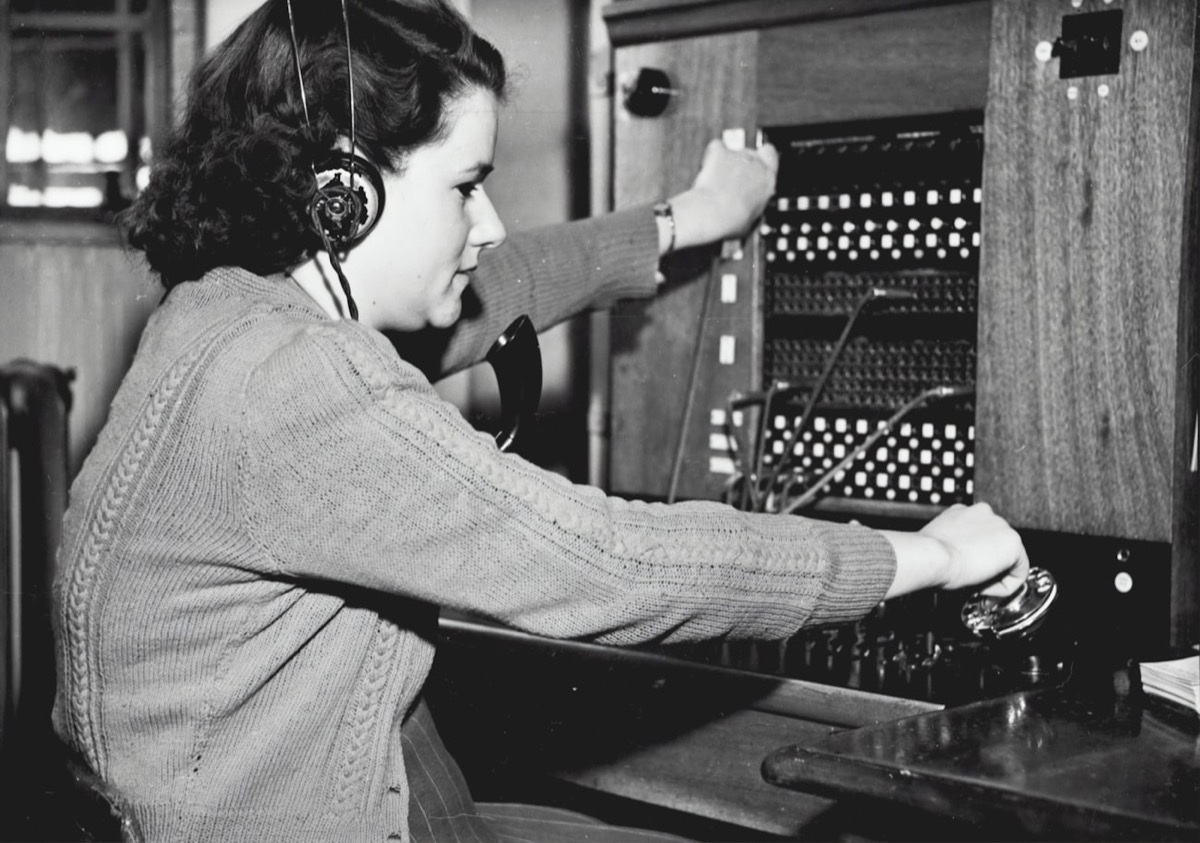
In 1948 a quiet engineer at Bell Labs published a paper about telephone lines. It quietly changed how we think about every message sent since, and it has something useful to say about your Monday morning dashboard.
The engineer was Claude Shannon, and the paper was “A Mathematical Theory of Communication”. He was trying to answer a practical question: how much can a channel carry, and how do you tell the message apart from the interference on the line? Along the way he gave us the word “bit” and a precise way to think about two things every working day is full of: signal and noise.
Information is what surprises you
Here is the idea in plain terms. Information is whatever reduces your uncertainty. A message tells you something only if you did not already know it. If I tell you the sun rose this morning, I have sent you almost no information, because you were sure of it anyway. If I tell you the sun did not rise, that is a great deal of information, and you would want to act on it.
Noise is everything on the line that is not the message. Static, crosstalk, the hiss between stations. Shannon’s genius was to measure both, and to show there is a hard limit on how much real signal a noisy channel can carry.
Now look at the dashboard
A modern operations screen has forty tiles, a dozen charts and a comforting wall of green. By Shannon’s definition, most of it is noise. Not because it is wrong, but because it tells you what you already expected. The single amber number that carries real information, the one thing you did not know, is buried in all the reassurance.
There is a quiet trap here. We measure what is easy to measure, and then we mistake volume for information. A status that reads “all normal” for 364 days a year carries almost nothing on those days. On the day it changes, it carries everything. The rare event is the informative one, which is exactly the event a crowded screen is worst at showing you.
The question to ask of any number on a screen is simple. What would I do differently if this changed? If the honest answer is nothing, it is decoration.
Why a near miss is high signal
This is also why a near miss is worth so much. It is, almost by definition, the system telling you something you did not know, before it has cost anything. It is high signal at a low price. A wall of green that hides it is not a safe wall. It is a noisy channel.
Shannon’s world was copper wire and crackle. Ours is dashboards and notifications. The maths underneath is the same, and so is the work: find the message in the noise, and then, the harder part by far, act on it.
References
- C. E. Shannon, “A Mathematical Theory of Communication”, Bell System Technical Journal, 1948. Archived copy.
- James Gleick, The Information: A History, a Theory, a Flood (Fourth Estate, 2011).
Make every report count.
Tell us what your team reports and we will show you how it works in Logincident.
Contact us