
The most important structure on site might disappear
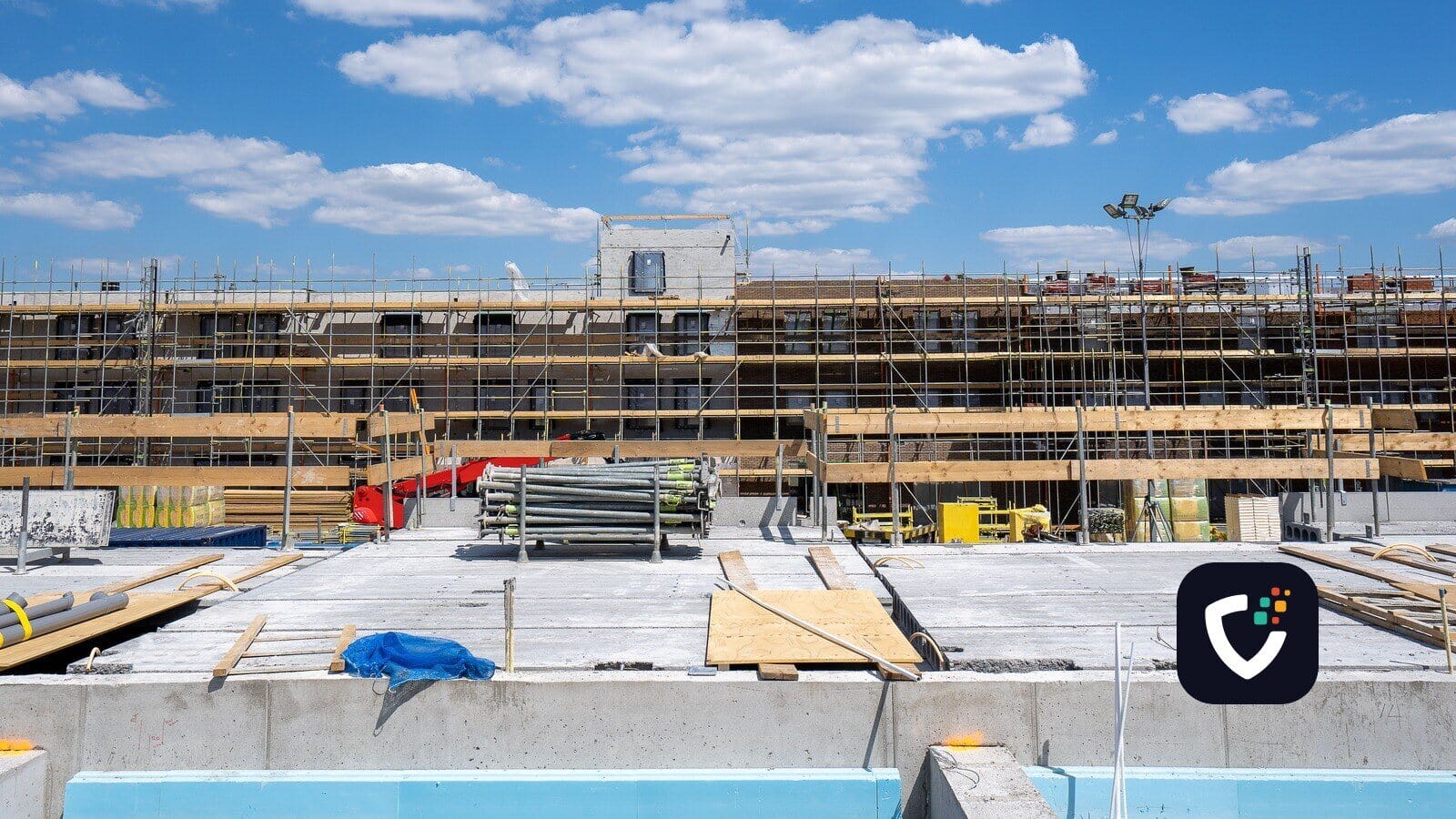
Imagine visiting a construction project twice. On the first visit, there are props, working platforms, access scaffolds and a forest of supports. On the second, the building is finished, the photographs look wonderful and almost everything that made the first visit possible has gone.
The project will be remembered for what remains. Yet some of its most consequential decisions concerned what would disappear.
Temporary works occupy an odd position in construction: essential to the job, easy to leave out of its story. Their short life can disguise the depth of thought they need. For clients and project teams, that makes them a useful test of whether a project is being imagined as a finished object or understood as something people must actually build.
A building has to survive becoming a building
A completed structure is only one state in a sequence. During construction, parts may be incomplete, access may depend on another arrangement, and equipment may need to operate on ground prepared specifically for it.
Britain’s Health and Safety Executive includes excavation support, falsework, scaffolding, haul roads and working platforms among temporary works. Its guidance covers Great Britain, so the arrangements described here are not a statement of Northern Ireland law. Its scope also extends to less spectacular items such as hoarding and site welfare units. The category is wider than the steelwork someone happens to notice. HSE, temporary works.
That breadth changes the conversation. Temporary works are involved in how a site functions, how one activity makes another possible and how the work reaches its next stage.
The interesting question for a client is therefore not simply how much temporary equipment appears in the budget. It is whether the project team has understood the conditions needed to deliver the permanent design.
A beautiful picture of the destination cannot explain the whole journey.
Short-lived does not mean low-consequence
The word temporary can carry an unfortunate suggestion: provisional, less important, something to get through until the proper thing arrives.
HSE’s temporary works FAQs directly challenge that instinct, calling for the same care in temporary works design and construction as in permanent works. They also explain that the engineer designing temporary works is not automatically the person coordinating them. Coordination covers a broader process. HSE, temporary works FAQs.
That distinction is worth lingering over. A project can have a design and still need someone to bring the surrounding activities together. Producing an answer to an engineering question does not, by itself, settle when the arrangement will be installed, how it will interact with other work or what happens when the sequence changes.
For the people commissioning a project, this is a reminder to look beyond the existence of a deliverable. A drawing matters because of the work it enables. Its place in the programme and the decisions around it deserve attention too.
The temporary arrangement is part of the project, even if it never makes it into the opening-day brochure.
The expensive conversation may have happened earlier
By the time an awkward construction sequence reaches site, several choices may already be difficult to revisit. The layout has been agreed. Access is constrained. Packages have been bought. A completion promise has been made.
At that point, temporary works can appear to be an extra cost generated by the contractor. Another possibility deserves examination: the permanent design and the delivery assumptions created a need that became visible later.
The Temporary Works Forum’s introduction to its constructability guide argues for an iterative approach involving clients, designers and contractors. It presents buildability as something to revisit through design, rather than a single late check. Temporary Works Forum, constructability guide.
The editorial implication is straightforward. Bringing construction thinking forward creates an opportunity to discuss choices while they remain choices.
That does not mean the design with the fewest props is always the best design. Temporary works may make a valuable architectural or engineering solution possible. Nor does early discussion guarantee a cheaper project. It makes the trade-off more visible: what the finished scheme offers, and what constructing it will demand.
A cost understood early can be a deliberate investment. The same cost discovered late can become an argument.
Coordination needs room to disagree
Consider a hypothetical project meeting where a change looks minor on the programme. A work area is needed earlier. A delivery moves. Another trade wants access. From each participant’s position, the request seems reasonable.
The difficulty lies in the combination. Someone needs to understand whether the assumptions behind the temporary arrangement still hold, and to obtain the right assessment when they may not.
HSE describes appointing a Temporary Works Coordinator as an effective management approach and says the role should carry adequate authority, including stopping unsatisfactory work. The same page is equally clear that there are no specific legal requirements about how temporary works should be managed, and that each organisation can choose how it arranges this. HSE, temporary works.
Both points matter, and they pull in different directions. Authority that exists only on paper is weak. But because no particular structure is required, copying a large project’s organisation onto every small job is not the purpose either.
A useful client conversation asks whether the person coordinating the work has the competence, time, access to advice and practical standing needed for that project. Can an uncomfortable answer reach the person controlling the programme? Will it arrive while there is still time to act on it?
The aim is a workable decision, not an impressive list of job titles.
Good preparation can make the achievement invisible
There is a peculiar reward for getting this work right. The temporary arrangement serves its purpose, the project moves on, and there may be little visible evidence of the difficulty it resolved.
That can make recognition uneven. The finished entrance is easy to celebrate. The construction sequence that made it practical is harder to photograph. People remember the building they can walk into more readily than the decisions that allowed it to stand there.
Project reviews could make more room for that less visible contribution. Which early conversation prevented an awkward interface? Where did the programme allow useful coordination? Which assumptions needed correction before work proceeded?
These questions concern judgement and collaboration. They do not require inventing a savings figure for an event that never happened. A team can explain why an approach worked without claiming to know the cost of every alternative history.
Equally, a successful outcome should not make every decision beyond criticism. The useful learning lies in understanding the process closely enough to repeat its strengths and recognise its limits.
Look at what will not be there at handover
Return to the two site visits. The finished building still deserves its photograph. But the first visit may reveal more about how the project is being led.
It shows how the team thinks about incomplete states, constrained space, changing conditions and the relationship between different packages of work. It shows whether the people responsible for delivery have been given a voice before the visible milestones take over.
Temporary works will eventually leave many projects. The quality of the thinking behind them will remain embedded in the result.
At the next project review, try looking away from the finished image for a moment. What has to exist before that image can become real, and who is making sure it receives the attention it deserves?
Make every report count.
Tell us what your team reports and we will show you how it works in Logincident.
Contact us